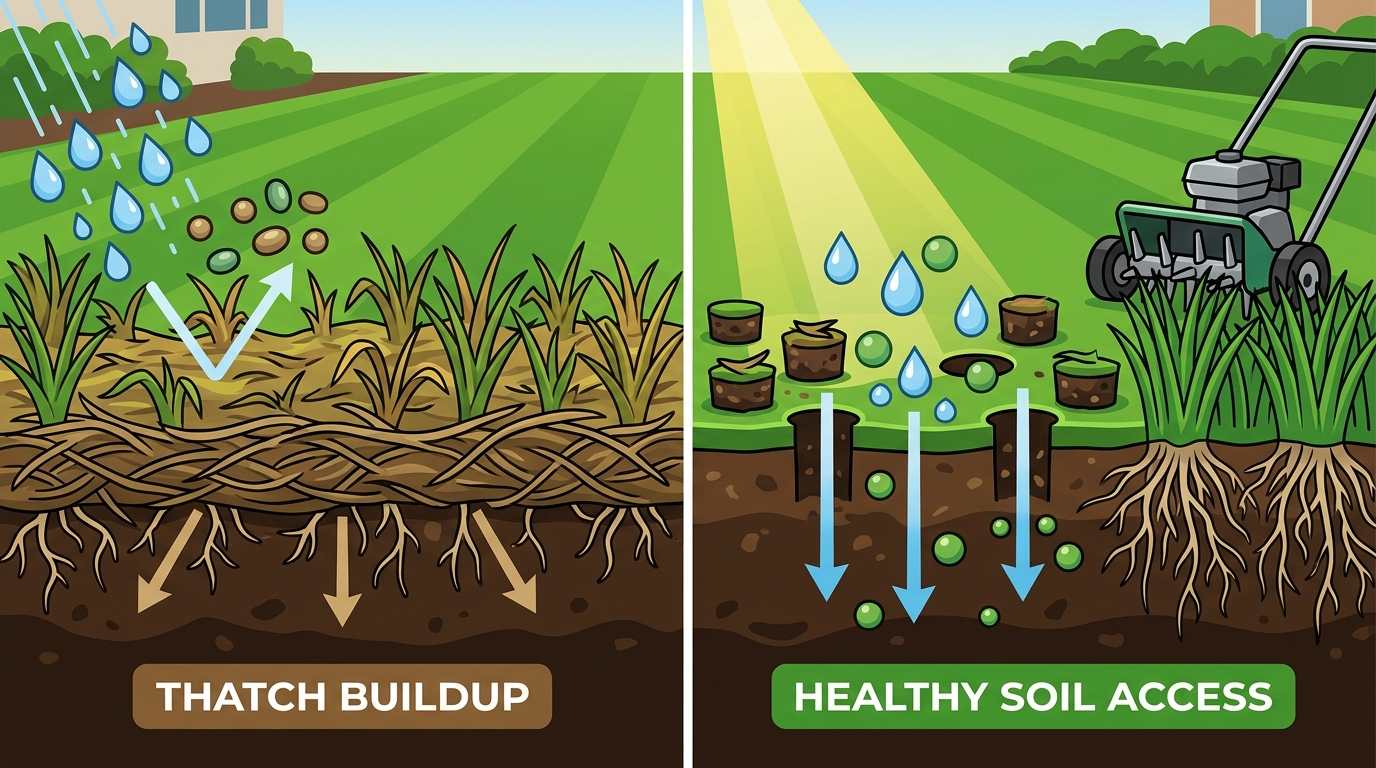
Thatch buildup prevents water and nutrients from reaching the soil, causing lawns to turn brown and patchy. This layer of dead organic matter acts as a barrier, starving the root zone. Kick-Ass Grass addresses this by using aeration and proper mowing to restore soil contact. Healthy soil access is the primary driver of consistent green color throughout the growing season. For additional details, review the .
Understanding Thatch and Its Formation
Thatch is the layer of dead roots and stems that sits between the green grass blades and the soil. It forms naturally as grass grows and dies back. A thin layer is normal, but excessive buildup becomes a problem. When thatch exceeds half an inch, it creates a spongy mat that hinders lawn health. For additional details, review the Customer Experience.
Some grass types are more prone to this issue. Bermudagrass and zoysiagrass are particularly susceptible to developing excessive thatch layers. These warm-season grasses produce dense root systems that decompose slowly. Understanding your specific grass type helps you anticipate when management is needed. For additional details, review the Frequently Asked Questions.
How Thatch Impacts Lawn Color
Thatch directly impacts color by blocking essential resources. Water cannot penetrate the mat to reach the roots. Fertilizers applied to the surface sit on top of the thatch instead of entering the soil. This lack of access leads to stress, which manifests as yellowing and browning. For additional details, review the About.
The visual effect is often uneven. Areas with heavy thatch turn brown while surrounding areas remain green. This patchy appearance is a clear sign of underlying soil issues. The lawn is not dying from lack of care, but from lack of access to the soil below.
Identifying Thatch Problems
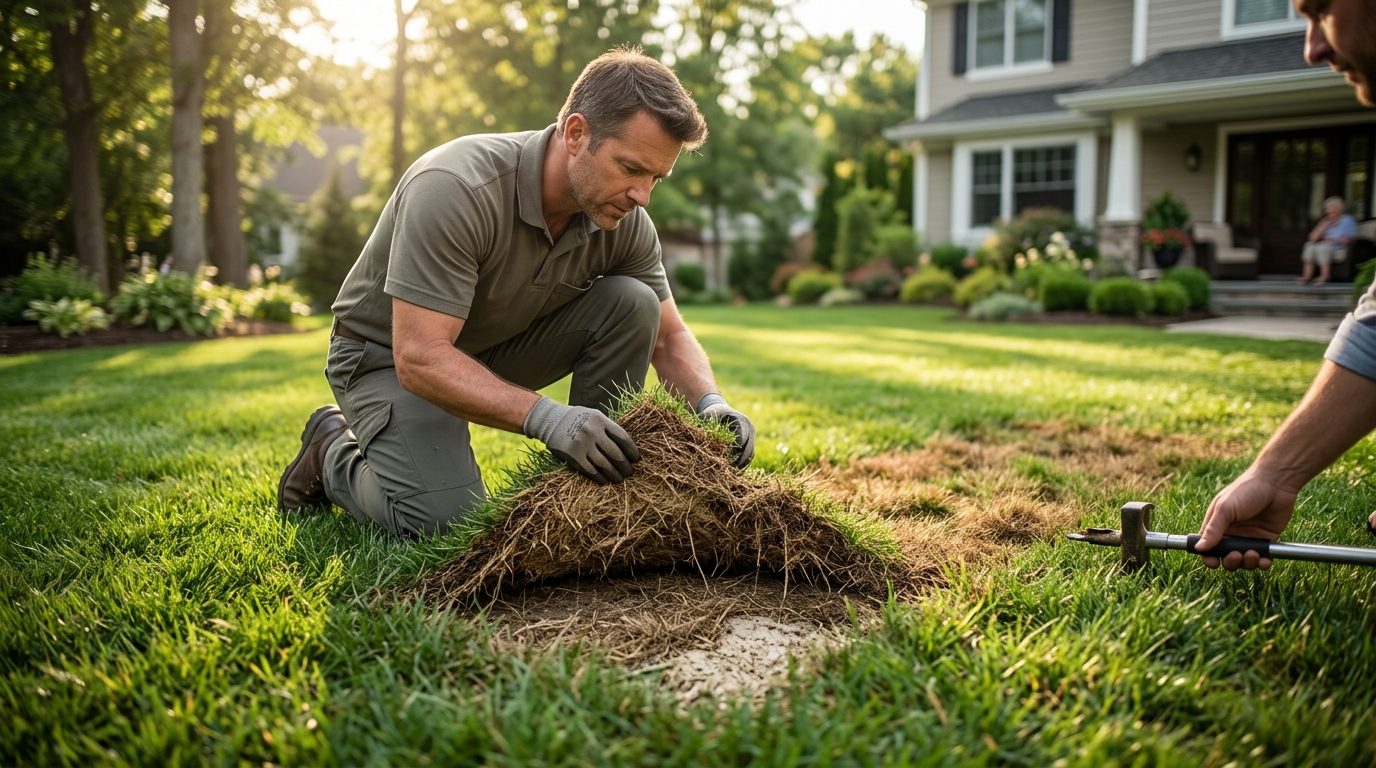
You can identify thatch by lifting a small section of turf. If the layer of dead material is thick and spongy, you have a buildup issue. A simple visual check is often enough to diagnose the problem. Look for a distinct separation between the green blades and the dark soil.
Another sign is how water behaves on the lawn. If water pools on the surface instead of soaking in, thatch is likely the culprit. This pooling prevents deep root growth. Shallow roots make the lawn more vulnerable to drought and heat stress. according to Thatch Management in
Effective Thatch Management Strategies
Prevention is the best approach to managing thatch. Mowing at the proper height with a sharp blade reduces buildup. Consistent mowing prevents the accumulation of dead material. Watering and fertilizing at the right rate and time also minimizes thatch formation, according to NC State Extension.
For existing buildup, aeration is the primary solution. Core aeration removes plugs of soil and thatch from the lawn. This process breaks up the mat and allows air, water, and nutrients to reach the roots. It is a mechanical intervention that restores soil contact.
Contrary to popular belief, leaving grass clippings on the lawn does not necessarily cause thatch buildup, as noted by UMass Amherst. Clippings are mostly water and decompose quickly. The real issue is the accumulation of dead roots and stems over time.
Professional Lawn Care Solutions
Professional services bring expertise to thatch management. Kick-Ass Grass uses a comprehensive approach that includes aeration and targeted treatments. We focus on identifying the specific problem in your lawn. Our goal is to restore the connection between the grass and the soil.
We believe in transparency and honesty. We only contact you when we have found a problem that needs attention. This ensures you receive targeted care without unnecessary services. Our experience helps us distinguish between normal thatch and problematic buildup.
Key Takeaways
- Thatch is a layer of dead roots and stems that can block water and nutrients.
- Excessive thatch, defined as greater than half an inch, causes brown and patchy lawns.
- Bermudagrass and zoysiagrass are particularly prone to thatch buildup.
- Mowing at the proper height with a sharp blade helps prevent thatch accumulation.
- Core aeration is the most effective method for breaking up existing thatch layers.
- Leaving grass clippings on the lawn does not necessarily cause thatch problems.
- Professional assessment can determine if your lawn needs aeration or other treatments.
Frequently Asked Questions
What is the ideal thickness of thatch in a lawn?
Thatch should be less than half an inch thick. A layer of this size is normal and beneficial. It provides insulation and protects the soil. When it exceeds this threshold, it begins to hinder lawn health.
Does leaving grass clippings cause thatch buildup?
No, leaving clippings does not necessarily cause thatch buildup. Clippings are mostly water and decompose rapidly. They return nutrients to the soil. The thatch layer is primarily composed of dead roots and stems.
How often should I aerate my lawn to manage thatch?
Aeration frequency depends on the grass type and thatch accumulation rate. Warm-season grasses may need annual aeration. Cool-season grasses might need it every two to three years. A professional can assess your specific needs. according to Organic Lawn Care
Can thatch buildup be reversed?
Yes, thatch buildup can be reversed. Aeration breaks up the mat and allows decomposition to resume. Proper mowing and watering practices prevent it from returning. With consistent management, the thatch layer will thin out.
What is the difference between thatch and topsoil?
Thatch is organic material, while topsoil is mineral soil. Thatch is spongy and light, whereas topsoil is dense and dark. Thatch sits on top of the soil. It is the layer that can block water and nutrient penetration.
How does thatch affect lawn color in summer?
Thatch blocks water from reaching the roots during hot weather. This causes the grass to stress and turn brown. The lawn may appear dry even if you are watering it. Aeration helps restore water access and maintains green color.
Restore Your Lawn's Health
Thatch management is essential for maintaining a vibrant, green lawn. By understanding how thatch forms and impacts your grass, you can take the right steps to address it. Kick-Ass Grass provides the expertise and tools to restore your lawn's health. We focus on solving the specific problems in your yard. To get started with a professional assessment, .