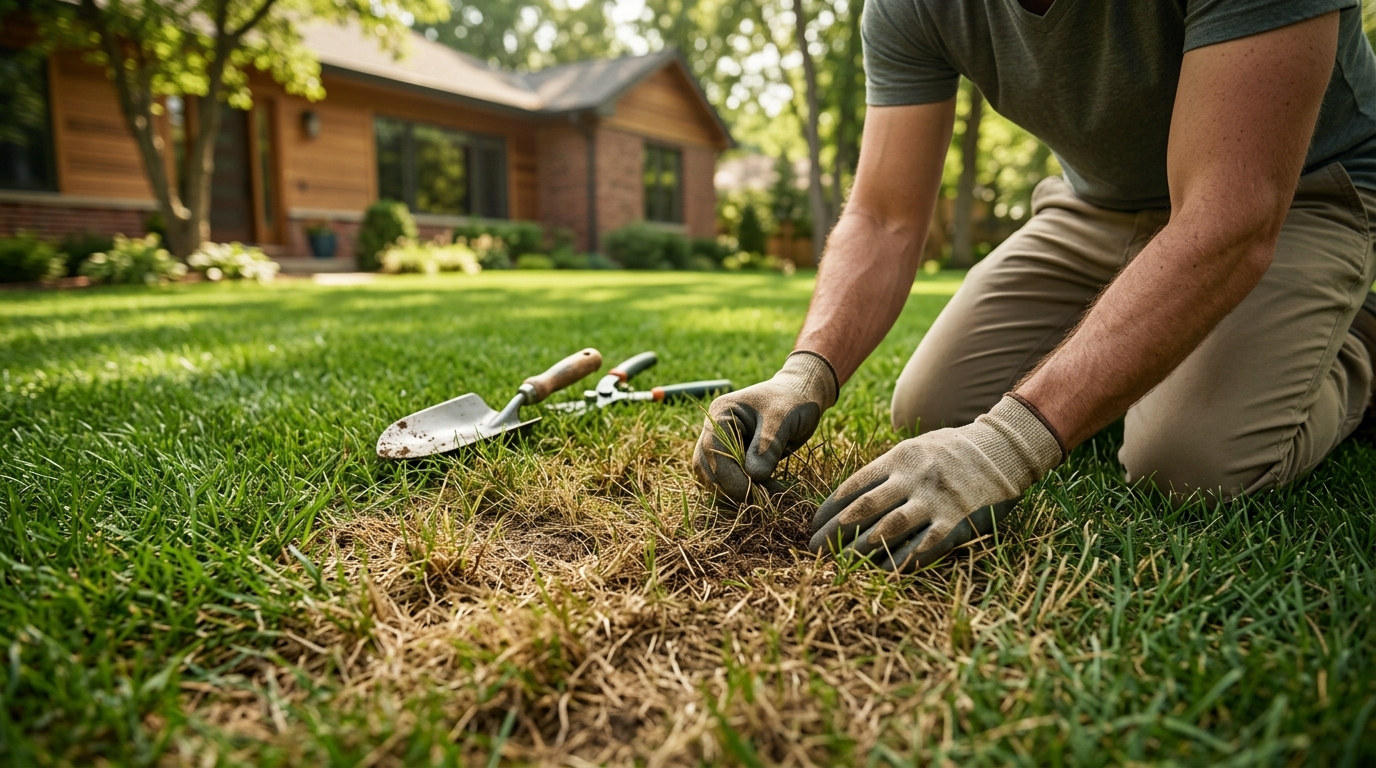
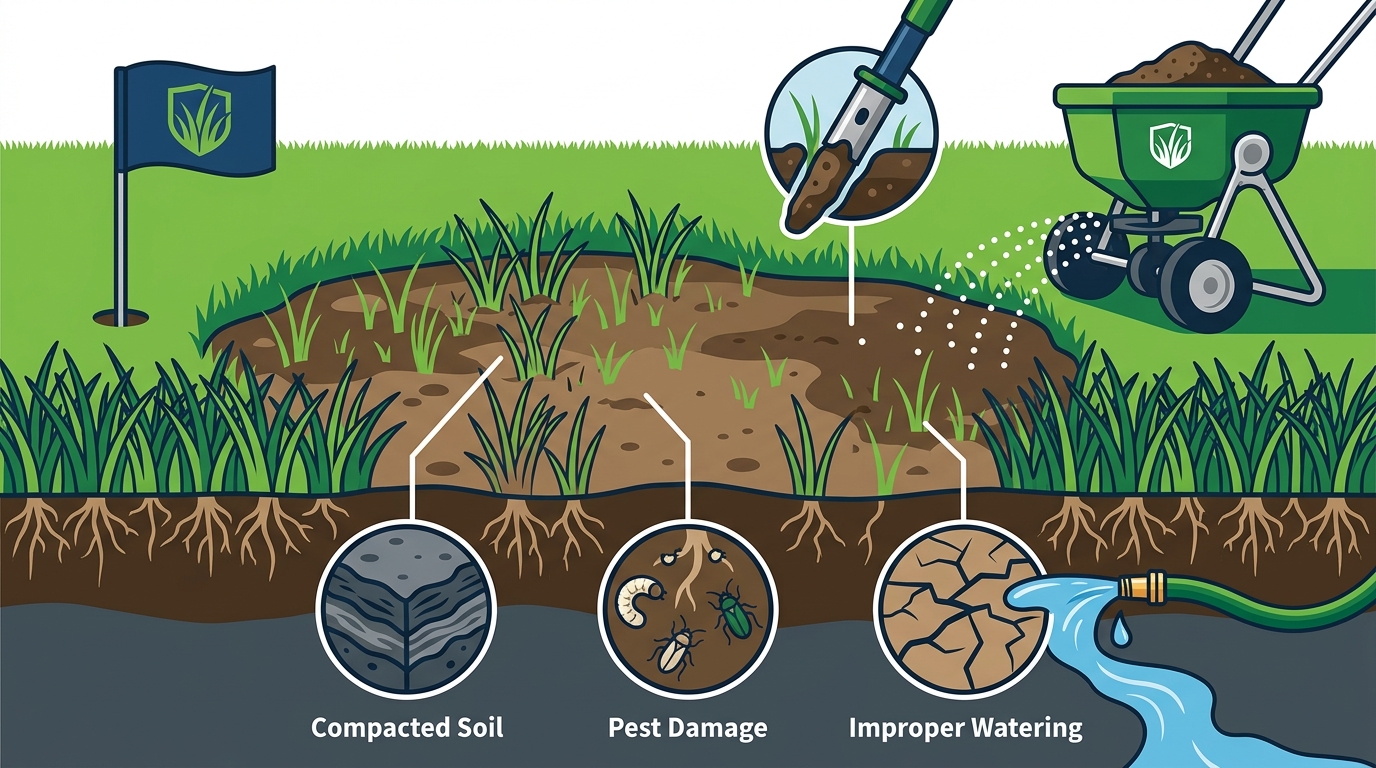
Thin or bare spots in your lawn are usually caused by a combination of soil compaction, pest damage, or improper watering. To fix them, you must identify the root cause, aerate the soil, and apply targeted treatments. Kick-Ass Grass specializes in diagnosing these specific issues to restore lawn density without unnecessary upsells.
Soil Compaction and Aeration Needs
Soil compaction is the leading cause of thin lawns in residential areas. When soil becomes too dense, grass roots cannot penetrate deep enough to access water and nutrients. This leads to shallow root systems that die off quickly during heat stress. Aeration is the process of creating small holes in the soil to relieve this pressure. For additional details, review the .
Heavy foot traffic and vehicle weight are primary contributors to compaction. In Sterling, Michigan, clay-heavy soils are particularly prone to this issue. If you notice that water pools on your lawn instead of soaking in, compaction is likely the culprit. Professional core aeration removes plugs of soil, allowing air, water, and nutrients to reach the root zone.
Identifying Compacted Soil
Look for areas where the grass is consistently thinner than the rest of the yard. These spots often feel hard underfoot. If you cannot easily push a screwdriver into the ground, your soil is likely compacted. Regular aeration, typically once or twice a year, is essential for long-term lawn health.
Pest Damage and Insect Control
Grub damage is a common reason for sudden bare patches. Grubs are the larvae of beetles that feed on grass roots, causing the turf to lift and die. When you pull on a patch of grass and it comes up easily, like a carpet, grubs are often the cause. This damage is most prevalent in late summer and early fall.
Other insects, such as chinch bugs or armyworms, can also cause thinning. These pests feed on the grass blades or stems, leading to yellowing and eventual death. Identifying the specific pest is crucial for effective treatment. Kick-Ass Grass uses targeted pest control strategies to address these issues without over-applying chemicals.
Monitoring for Pests
Regularly inspect your lawn for signs of insect activity. Look for irregular patches of brown or yellow grass. You can also perform a simple soil test by digging up a small section to check for larvae. Early detection allows for timely intervention before the damage becomes severe.
Watering Practices and Drought Stress
Improper watering is a frequent cause of thin lawns. Both overwatering and underwatering can stress grass, leading to thinning. Overwatering promotes shallow roots and fungal diseases, while underwatering causes drought stress. The goal is to water deeply and infrequently to encourage deep root growth.
Drought stress is particularly challenging in summer months. When temperatures exceed 80 degrees, lawns require consistent moisture to survive. If you do not water your lawn during these hot periods, the grass will go dormant and turn brown. This dormancy can be mistaken for disease or pest damage. Consistent watering is the key to maintaining green, dense turf.
Optimal Watering Schedule
Water your lawn in the early morning to reduce evaporation. Aim for one to two inches of water per week, including rainfall. Use a rain gauge to measure the amount of water your lawn receives. Adjust your schedule based on weather conditions and soil type. Sandy soils may require more frequent watering, while clay soils need less frequent but deeper watering.
Thatch Buildup and Dethatching
Thatch is a layer of dead grass and roots that sits between the soil and the green blades of grass. A thin layer of thatch is normal and beneficial, but excessive thatch can prevent water and nutrients from reaching the soil. This barrier leads to thin, weak grass that is susceptible to disease.
Thatch buildup is often caused by over-fertilization and infrequent mowing. When grass is cut too short, it produces more thatch as a defense mechanism. Dethatching is the process of removing this excess layer to restore soil contact. This procedure allows the grass to breathe and absorb nutrients more effectively.
When to Dethatch
Dethatch your lawn in the spring or early fall when the grass is actively growing. This timing allows the lawn to recover quickly from the stress of the procedure. If thatch is less than half an inch thick, dethatching is usually not necessary. However, if it exceeds this threshold, professional dethatching can significantly improve lawn density.
Targeted Treatment and Maintenance
Fixing thin spots requires a targeted approach rather than a one-size-fits-all solution. Different areas of your lawn may have different problems, such as compaction in one spot and pest damage in another. A professional assessment can identify these specific issues and recommend the appropriate treatments.
Transparency is key in lawn care. You should only receive services that address actual problems found in your lawn. Kick-Ass Grass prioritizes honesty by contacting clients only when specific issues are identified. This approach ensures that you receive targeted care without unnecessary expenses. Regular maintenance, including mowing, fertilizing, and pest control, is essential for preventing future thinning.
Long-Term Lawn Health
Consistent care is the best defense against thin lawns. Establish a routine that includes regular mowing, proper watering, and seasonal treatments. Monitor your lawn for signs of stress and address them promptly. By working with a trusted provider, you can achieve a dense, healthy lawn that stays green all summer long.
Key Takeaways
- Soil compaction is a primary cause of thin lawns and can be relieved through core aeration.
- Grub damage often causes grass to lift easily and requires targeted pest control.
- Improper watering, both over and under, leads to stress and thinning.
- Excessive thatch prevents nutrient absorption and should be removed if it exceeds half an inch.
- Targeted treatments based on specific diagnoses are more effective than generic services.
- Consistent watering during hot weather is essential for maintaining green turf.
- Professional assessment helps identify unique lawn issues without unnecessary upsells.
Frequently Asked Questions
What is the main cause of thin spots in my lawn?
The main causes are soil compaction, pest damage, and improper watering. Each of these factors stresses the grass, leading to thinning and bare patches.
How often should I aerate my lawn?
You should aerate your lawn once or twice a year, typically in the spring and fall. This frequency helps relieve compaction and promotes deep root growth.
Can I fix bare spots myself?
Yes, you can fix minor bare spots by overseeding and improving watering practices. However, severe issues like compaction or pest damage may require professional treatment.
What is thatch and why is it a problem?
Thatch is a layer of dead grass and roots. Excessive thatch prevents water and nutrients from reaching the soil, leading to weak, thin grass.
How do I know if grubs are damaging my lawn?
Look for irregular patches of brown grass that lift easily when pulled. You can also dig up a small section to check for larvae in the soil.
Does Kick-Ass Grass use chemical weed control?
Kick-Ass Grass uses naturally occurring chemicals for weed control. These substances are found in all organic living things and are applied responsibly to target specific weeds.
How much water does my lawn need in summer?
Your lawn needs one to two inches of water per week, including rainfall. Water deeply and infrequently to encourage deep root growth.
Conclusion
Restoring lawn density requires identifying and addressing the root causes of thinning. Whether it is compaction, pests, or watering issues, a targeted approach yields the best results. Kick-Ass Grass offers professional diagnosis and treatment to help you achieve a healthy, dense lawn. today to schedule an assessment and take the first step toward a greener yard.