
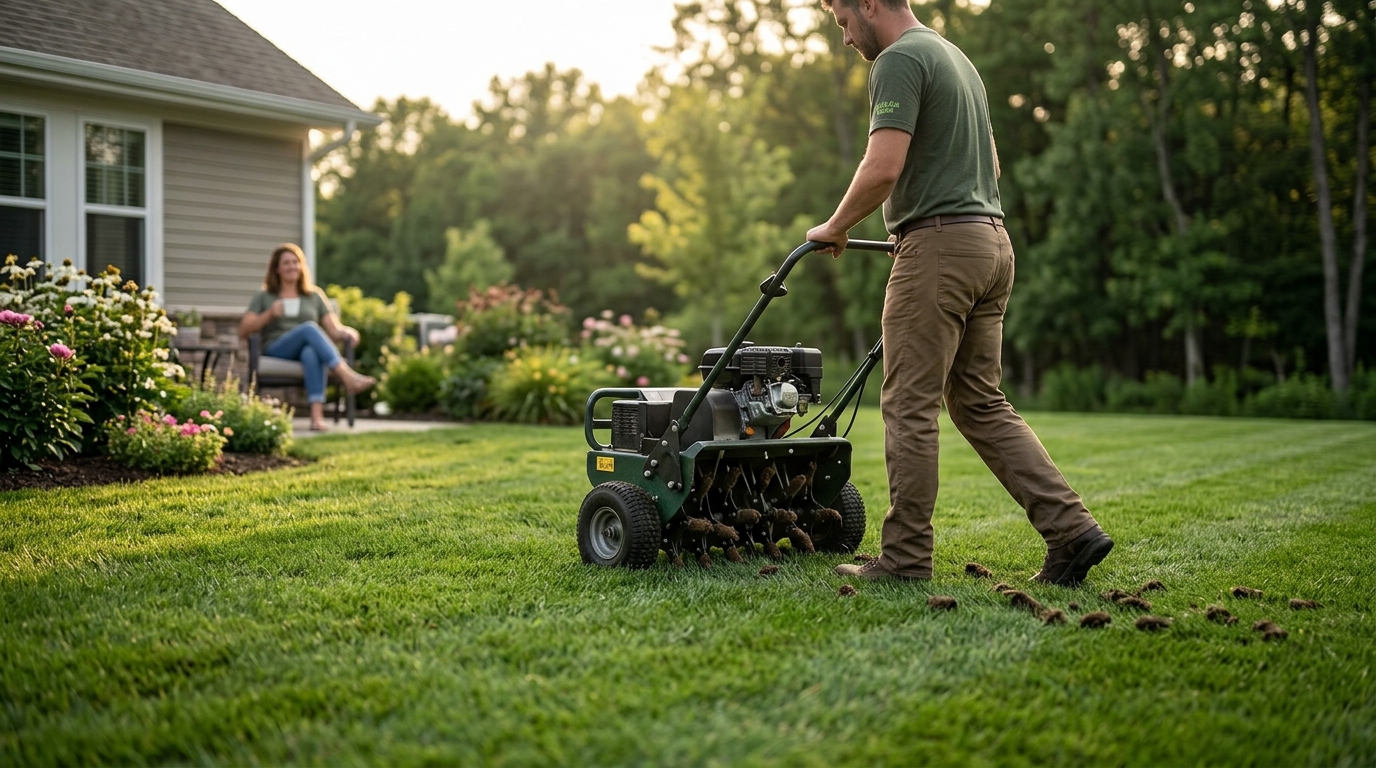
Most lawns benefit from aeration once a year, though heavily compacted soils or high-traffic areas may require it twice. Aeration is the process of creating small holes in the soil to allow air, water, and nutrients to reach the root zone. This simple mechanical step prevents the dense, hard-packed ground that suffocates grass roots and leads to thin, brown patches. For additional details, review the .
Understanding Soil Compaction and Root Health
Soil compaction is the physical process where soil particles are pressed together, reducing the pore space needed for root growth. When soil becomes too dense, grass roots cannot penetrate deeply, leaving the lawn vulnerable to drought and heat stress. In Sterling, Michigan, the clay-heavy soils common in the region are particularly prone to this issue. Heavy foot traffic, vehicle parking, and regular mowing all contribute to this density over time.
Healthy turf requires a balance of air and water in the soil profile. Without adequate aeration, water pools on the surface instead of soaking in, leading to runoff and nutrient loss. The roots remain shallow, which means the grass cannot access the deeper moisture reserves available in the subsoil. This shallow root system is the primary reason many lawns turn brown during the peak summer heat.
Standard Frequency: The Annual Baseline
For the average residential lawn, aeration once a year is the standard recommendation. This frequency is sufficient to maintain soil structure and prevent the gradual buildup of thatch and compaction. The best time to perform this task is in the early fall, specifically September or October. Aeration in the fall allows the grass to recover and establish deeper roots before the winter dormancy period. according to 1559 Proper Lawn
During the fall, the soil is still warm enough for root growth, but the air is cooler, reducing evaporation stress. This timing aligns perfectly with the natural growth cycle of cool-season grasses like Kentucky bluegrass and tall fescue. By aerating in the fall, you prepare the lawn to handle the following spring and summer with a robust root system. This proactive approach is far more effective than trying to fix a damaged lawn in the heat of July. according to 16 Vegetable Gardening
When to Aerate Twice a Year
Some lawns require aeration twice a year to maintain optimal health. This is typically necessary for high-traffic areas, such as dog runs, play areas, or driveways that have been used for parking. These zones experience extreme compaction that a single annual pass cannot fully resolve. If you notice persistent bare spots or areas where water sits on the surface for hours, your lawn likely needs a second aeration session. according to Mowing Your Lawn
The second session is usually scheduled in the spring, around April or May. This timing helps break up any winter compaction and prepares the soil for the rapid growth phase of the spring. It also allows for the application of pre-emergent herbicides and fertilizers to be absorbed more effectively. For commercial properties or large estates, this bi-annual schedule is often the standard to ensure uniform coverage and performance across large acreage.
Signs Your Lawn Needs Aeration Now
There are several visual and physical indicators that your lawn is due for aeration. One of the most common signs is the presence of thatch, which is the layer of dead grass and roots sitting on top of the soil. If the thatch layer is thicker than half an inch, it acts as a barrier, preventing water and nutrients from reaching the living roots. A simple test is to try pushing a screwdriver into the soil; if it meets significant resistance, the soil is likely compacted.
Another indicator is the behavior of water after rainfall or irrigation. If water runs off the lawn instead of soaking in, the soil has lost its ability to absorb moisture. This runoff carries away valuable nutrients and can lead to erosion. Additionally, if your lawn is consistently thin or patchy despite regular watering and fertilizing, the issue is likely below the surface. Addressing the soil structure through aeration is the only way to resolve these underlying problems.
The Impact of Aeration on Fertilizer Efficiency
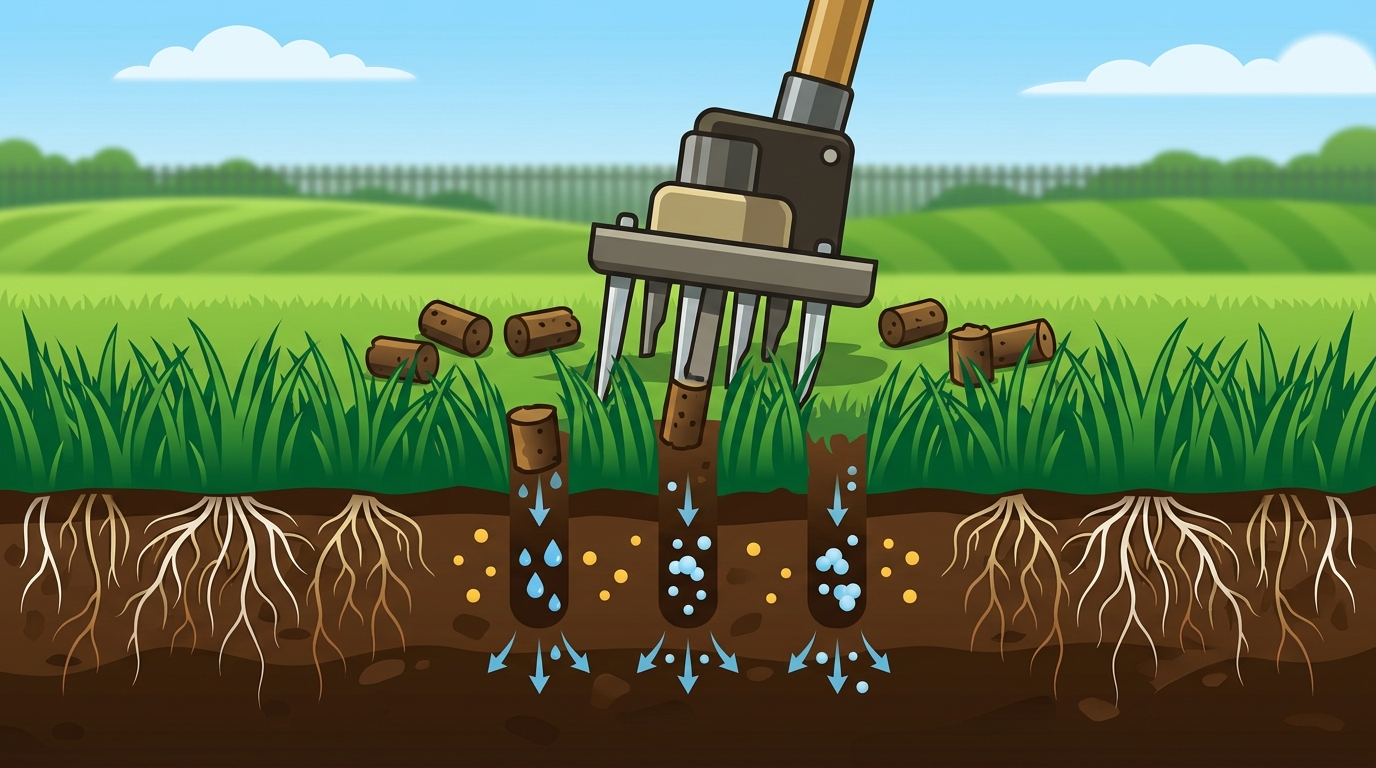
Aeration directly improves the efficiency of fertilizer applications. When soil is compacted, fertilizer granules or liquids sit on the surface and are washed away by the next rain. Aeration creates channels that allow these nutrients to penetrate deep into the root zone. This ensures that the grass receives the food it needs exactly where it can use it. This efficiency means you may need less fertilizer over time, saving money and reducing environmental impact.
Key Takeaways
- Most lawns require aeration once a year, typically in the early fall.
- High-traffic areas or heavily compacted soils may need aeration twice a year.
- Soil compaction is the primary enemy of deep root growth and drought tolerance.
- Thatch layers thicker than half an inch indicate a need for aeration.
- Aeration improves water absorption and fertilizer efficiency.
- Spring aeration is best for breaking up winter compaction.
- Fall aeration prepares the lawn for winter and promotes deep root growth.
Frequently Asked Questions
What is the best time of year to aerate a lawn?
The best time to aerate is in the early fall, specifically September or October. This timing allows the grass to recover and grow deeper roots before winter. Spring aeration is also an option for a second session if needed.
Can I aerate my lawn myself?
How long does it take for a lawn to recover from aeration?
Most lawns recover within a few days to a week. The holes close up as the grass grows over them. You should avoid heavy foot traffic on the aerated areas for the first 24 to 48 hours to allow the soil to settle.
Does aeration help with weed control?
Indirectly, yes. A healthy, dense lawn is more resistant to weed invasion. By improving soil conditions and promoting thick grass growth, aeration helps crowd out weeds naturally. It also helps herbicides penetrate the soil more effectively.
How much does professional aeration cost?
Costs vary by region and lawn size. In the Sterling, Michigan area, professional aeration is often bundled with other lawn care services. It is best to request a quote based on your specific lawn size and soil conditions.
Should I water my lawn after aeration?
Yes, watering after aeration helps the soil settle and allows the grass to recover. It also helps the nutrient-rich soil plugs break down and return to the lawn, providing a natural fertilizer.
What is the difference between spike and core aeration?
Spike aeration pokes holes in the soil, which can actually compact the soil further around the holes. Core aeration removes small plugs of soil, creating larger voids that allow for better air and water movement. Core aeration is generally considered more effective.
Conclusion
Proper aeration is a critical component of a healthy lawn care routine. By understanding the frequency and timing that suits your specific soil conditions, you can ensure your lawn remains vibrant and resilient. For residents in Sterling, Michigan, partnering with a local expert ensures that your lawn receives the targeted care it needs without unnecessary services. Kick-Ass Grass offers professional aeration and comprehensive lawn care solutions designed to deliver results. To plan your visit, today.