Why Weeds Are Resistant to Chemicals and What It Means for Your Lawn
Herbicide resistance is the evolutionary process where weed populations develop the ability to survive specific chemical treatments. This phenomenon occurs because repeated use of the same herbicide class selects for resistant individuals. For homeowners, this means standard chemical sprays may no longer work, requiring a shift toward integrated pest management and diverse control strategies to maintain a healthy lawn. For additional details, review the .
The Evolutionary Mechanism of Herbicide Resistance
Herbicide resistance is a natural biological response driven by natural selection. When a lawn is treated with a specific herbicide, susceptible weeds die, but a small fraction of the population may possess genetic traits that allow them to survive. These survivors reproduce, passing the resistance genes to the next generation. Over time, the weed population becomes dominated by resistant individuals, rendering the original chemical ineffective. This process is not caused by the chemical itself but by the selective pressure it applies to the weed population.
Research indicates that since 1996, the widespread adoption of genetically modified herbicide-resistant crops has accelerated the evolution of resistant weed populations in agricultural settings, which can then migrate into residential lawns. Understanding this mechanism is crucial for homeowners because it explains why a product that worked perfectly last year might fail this year. The implication is that relying on a single chemical solution is a short-term strategy that inevitably leads to long-term failure.
Common Weeds Developing Resistance in Residential Lawns
Several common lawn weeds have shown significant resistance to standard herbicides. Dandelions, creeping Charlie, and violets are often the first to appear, but grassy weeds like crabgrass and fescue are becoming increasingly problematic. According to the University of Illinois Extension, grassy weeds are becoming more common in lawns, and many of these species have developed resistance to Group 2 and Group 9 herbicides. This shift means that homeowners are facing a different set of challenges than previous generations of lawn care professionals.
Waterhemp, a common agricultural weed, has developed resistance to Group 15 herbicides, illustrating the breadth of the resistance crisis. While waterhemp is less common in residential lawns, its presence in nearby fields can introduce resistant seeds into home landscapes. The implication for homeowners is that weed identification is more critical than ever. Misidentifying a resistant weed and applying the wrong herbicide not only wastes money but also accelerates the selection for even more resistant populations.
Impact on Homeowner Lawn Care Strategies
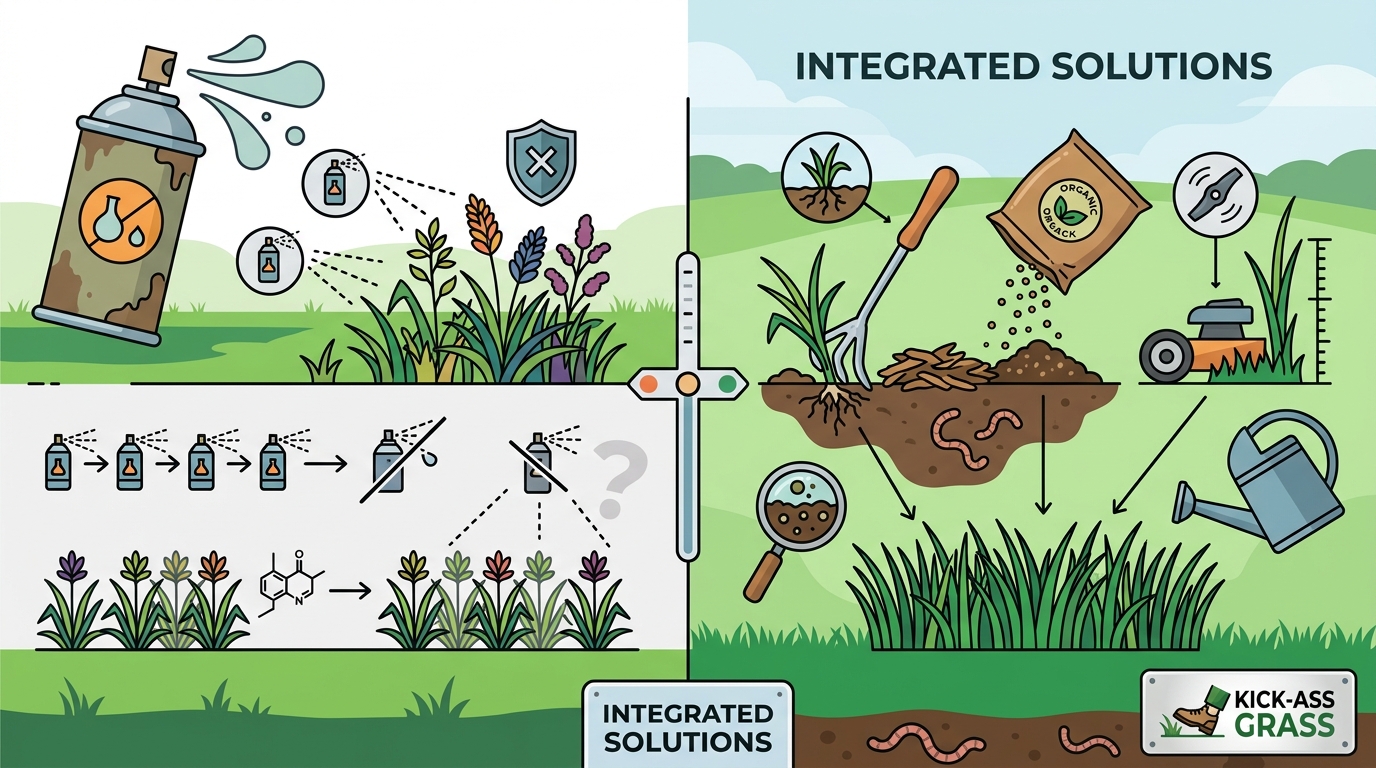
The rise of herbicide-resistant weeds forces a reevaluation of traditional lawn care practices. Homeowners who rely solely on annual chemical applications may find their lawns increasingly infested with weeds that ignore their treatments. This shift requires a move toward integrated pest management, which combines cultural, mechanical, biological, and chemical controls. Cultural practices such as proper mowing height, adequate watering, and soil aeration create an environment where desirable grasses outcompete weeds, reducing the need for chemical interventions. according to Broadleaf Weeds in
At Kick-Ass Grass, we emphasize transparency and honesty in our approach to lawn care. We only contact clients when we have identified a specific problem that needs attention, avoiding unnecessary services. This philosophy aligns with the need for targeted, evidence-based weed management. By focusing on the specific weeds present in a lawn, we can select the most effective control method, whether that is a chemical treatment, mechanical removal, or cultural adjustment. The implication is that a one-size-fits-all approach to weed control is no longer viable in the face of evolving resistance.
Integrated Pest Management as a Sustainable Solution
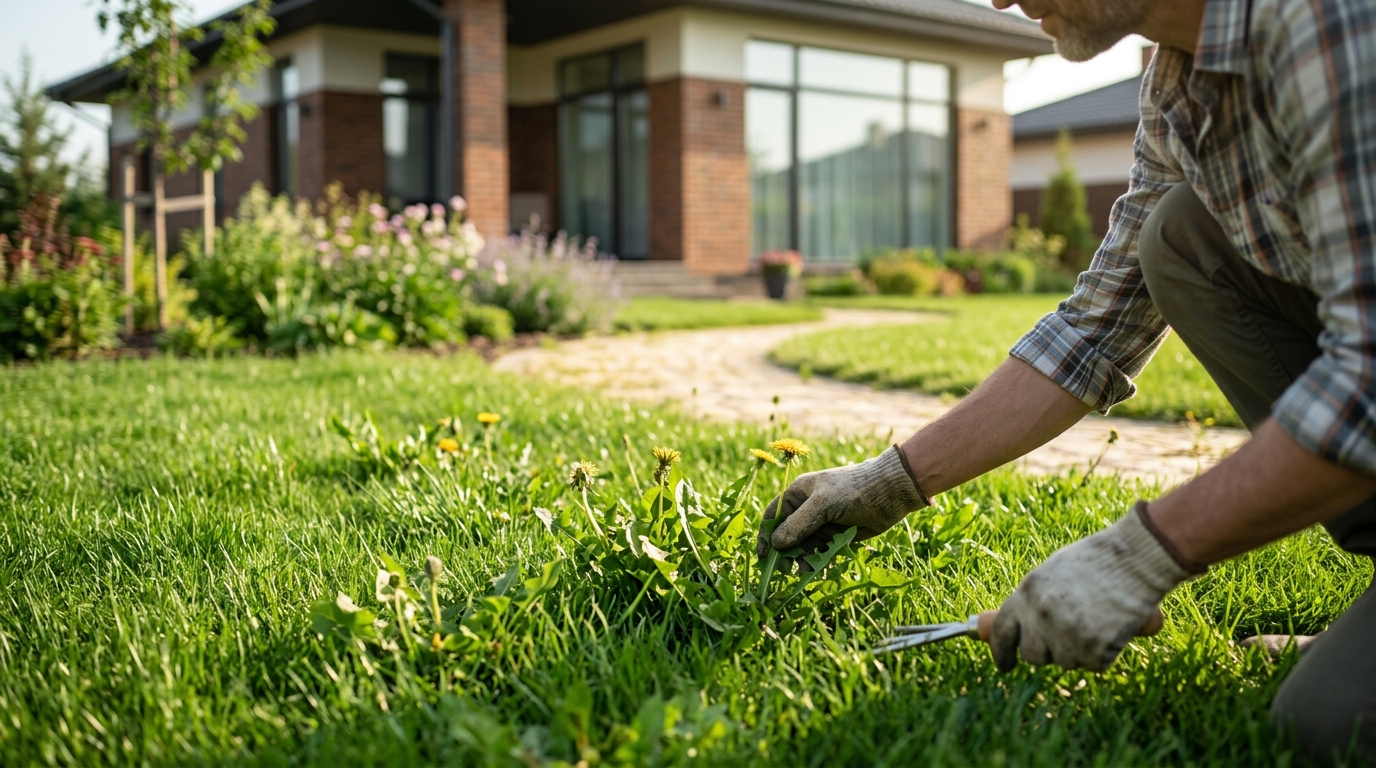
Integrated pest management is a long-term strategy that focuses on preventing weed problems rather than just reacting to them. This approach involves monitoring the lawn regularly to identify weeds early, before they become established and resistant. Early detection allows for targeted interventions that minimize the use of broad-spectrum herbicides. For example, hand-pulling dandelions in the spring can prevent them from setting seed and spreading, reducing the need for chemical treatments later in the season.
Proper identification is a key component of integrated pest management. The University of Florida’s Weed Management Guide for Florida Lawns emphasizes that understanding how and why weeds are present is essential for selecting the best control strategy. This knowledge empowers homeowners to make informed decisions about their lawn care. The implication is that investing time in learning about common lawn weeds and their life cycles can save money and reduce the environmental impact of lawn maintenance.
Key Takeaways
- Herbicide resistance is an evolutionary process where weeds develop the ability to survive specific chemical treatments.
- Repeated use of the same herbicide class accelerates the selection for resistant weed populations.
- Grassy weeds like crabgrass and fescue are becoming increasingly resistant to standard herbicides.
- Integrated pest management combines cultural, mechanical, biological, and chemical controls for sustainable weed management.
- Proper weed identification is critical for selecting the most effective control strategy.
- Targeted, evidence-based lawn care reduces the need for broad-spectrum herbicides and slows the evolution of resistance.
Frequently Asked Questions
Why do weeds become resistant to herbicides?
Weeds become resistant to herbicides through natural selection. When a herbicide is applied, susceptible weeds die, but resistant individuals survive and reproduce, passing on their resistance genes to the next generation.
How can I tell if the weeds in my lawn are resistant?
If a herbicide that previously worked effectively no longer controls the weeds, it may be a sign of resistance. Consult a lawn care professional to identify the specific weeds and recommend an alternative control strategy.
What is integrated pest management?
Integrated pest management is a long-term strategy that combines cultural, mechanical, biological, and chemical controls to manage pests in an environmentally responsible way.
Are all herbicides equally effective against resistant weeds?
No, different herbicides target weeds through different mechanisms. Rotating herbicides with different modes of action can help slow the development of resistance.
How often should I apply herbicides to my lawn?
Apply herbicides only when necessary and according to label instructions. Over-application can accelerate the development of resistance and harm the environment.
Can I prevent herbicide resistance in my lawn?
Yes, by using integrated pest management practices, rotating herbicides, and maintaining a healthy lawn that outcompetes weeds, you can help prevent the development of resistance.
Conclusion
The evolution of herbicide-resistant weeds is a significant challenge for modern lawn care. By understanding the mechanisms of resistance and adopting integrated pest management strategies, homeowners can maintain healthy, weed-free lawns without relying solely on chemical treatments. At Kick-Ass Grass, we are committed to providing transparent, evidence-based lawn care that addresses the specific needs of your property. To learn more about our services and how we can help you manage weeds effectively, visit our website.