7 Proven Ways to Thicken Up a Sparse Lawn This Season
A sparse lawn is more than a cosmetic issue; it is a structural weakness that invites weeds and pests. Kick-Ass Grass, a professional lawn care service with 16 years of industry experience, focuses on identifying and resolving specific lawn problems rather than offering unnecessary services. This approach ensures customers receive targeted care without telemarketing calls or superfluous upsells. The following strategies address the root causes of low density, from soil compaction to improper mowing, to help you achieve a robust, healthy turf. For additional details, review the .
1. Aerate to Break Up Soil Compaction
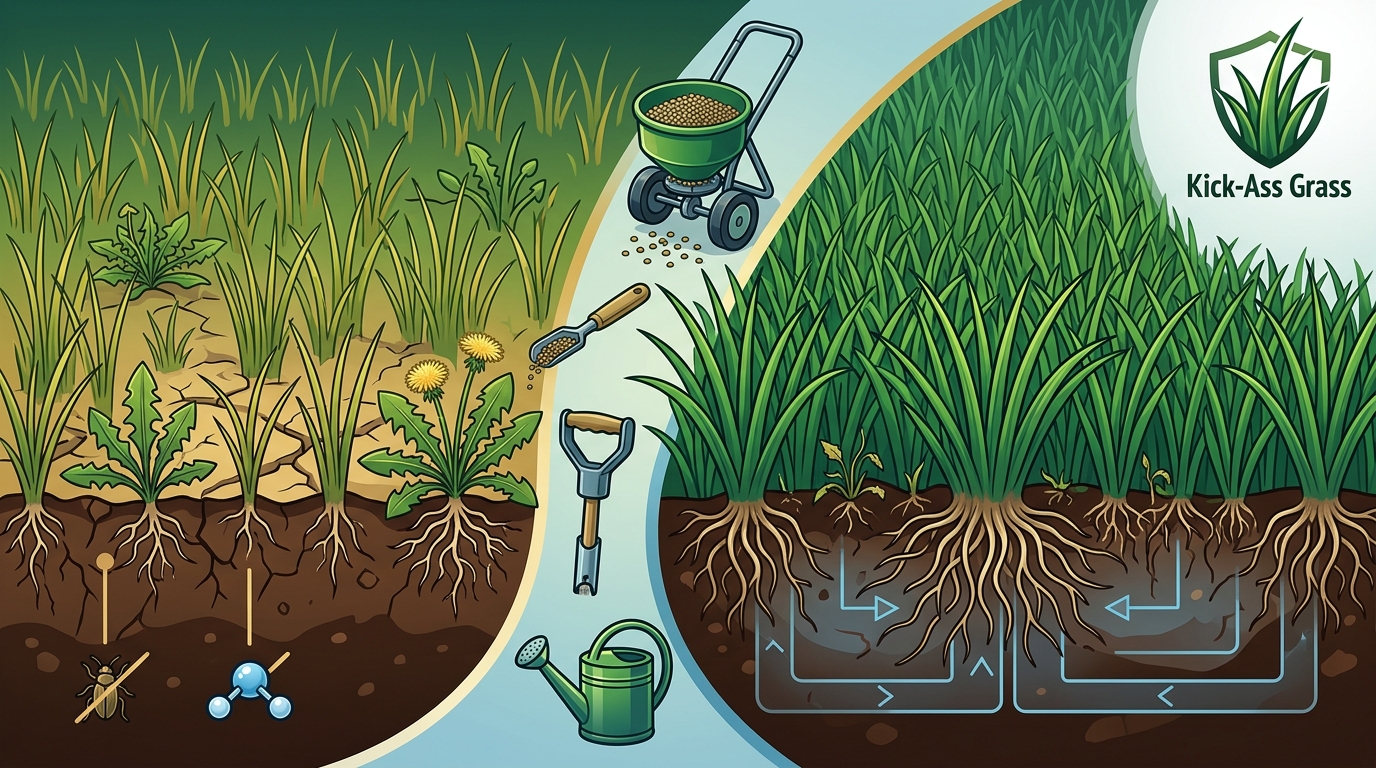
Core aeration is the process of removing small plugs of soil to relieve compaction and improve root growth. Compacted soil prevents water, air, and nutrients from reaching the root zone. This physical barrier limits the lawn's ability to spread and fill in thin areas. By opening up the soil, you create pathways for roots to expand deeper and wider.
2. Adjust Mowing Height for Root Depth
Mowing height is the distance between the soil surface and the top of the grass blade. Cutting grass too short stresses the plant and reduces its ability to photosynthesize. Taller grass shades the soil, reducing weed germination and retaining moisture. Aim for a height that encourages deep root systems rather than shallow, fragile turf.
3. Apply Balanced Fertilization
Fertilization is the application of nutrients to the soil to support plant growth and development. A sparse lawn often lacks the nitrogen and potassium required for dense growth. Using a balanced fertilizer provides the energy needed for the grass to produce new shoots and runners. Consistent feeding schedules help maintain density throughout the growing season. according to Healthy Lawns Clean
4. Control Weeds Without Over-Application
Weed control is the management of unwanted plants that compete with turf for resources. Weeds steal water and nutrients, preventing your grass from thickening. Kick-Ass Grass offers non-herbicide weed control options that address the issue without unnecessary chemical load. Targeted treatment ensures your desired grass species has the space to expand.
5. Overseed Bare Patches
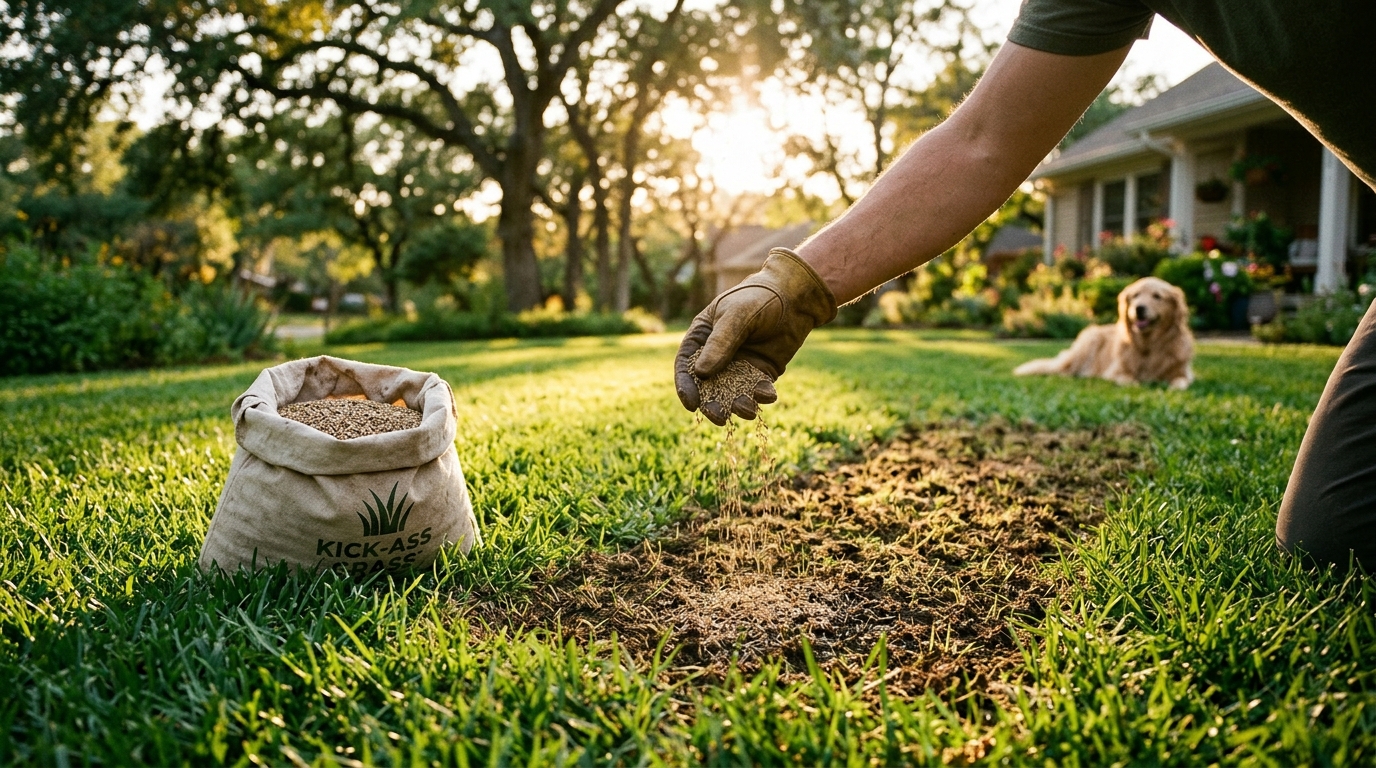
Overseeding is the process of sowing grass seed over an existing lawn to fill in thin or bare spots. This method is the fastest way to increase density in established lawns. Choose a grass variety that matches your existing turf and climate zone. Proper seed-to-soil contact is critical for germination and establishment.
6. Optimize Watering Practices
7. Maintain a Consistent Care Schedule
Lawn maintenance is the ongoing management of turf health through regular service and monitoring. Consistency is key to preventing the return of sparse conditions. Professional services like those from Kick-Ass Grass prioritize transparency and honesty. They only contact you when they have actually found a problem in your lawn that needs attention, ensuring you receive targeted care.
Choosing the Right Strategy
Select the method that addresses the primary cause of your sparse lawn. If soil compaction is the issue, start with aeration. If weeds are the main competitor, prioritize targeted weed control. For immediate visual improvement, overseeding is the most effective tool. A combination of these strategies yields the best long-term results.
Frequently Asked Questions
How long does it take to thicken a sparse lawn?
It typically takes one to two growing seasons to see significant density improvement. Overseeding can show results within weeks, while aeration and fertilization require a full season to manifest.
Can I use organic fertilizer to thicken my lawn?
Yes, organic fertilizers release nutrients slowly and can improve soil health over time. They are a viable option for those seeking a more natural approach to lawn care.
What is the best time of year to aerate?
Early fall is generally the best time for aeration. The soil is warm, and the grass is actively growing, allowing it to recover quickly from the process.
Do I need to water after overseeding?
Yes, consistent moisture is critical for seed germination. Keep the soil consistently moist for the first two to three weeks after overseeding.
How does Kick-Ass Grass handle weed control?
Kick-Ass Grass offers non-herbicide weed control and guarantees the greenest lawn on the block all summer long if you water your lawn. Their approach focuses on identifying and resolving specific issues rather than applying unnecessary services.
Is it worth hiring a professional for a sparse lawn?
Yes, professionals have the expertise to diagnose the root cause of sparseness. With 16 years of industry experience, Kick-Ass Grass brings unmatched expertise and dedication to lawn care, ensuring you get the right solution for your specific situation.
Conclusion
Thickening a sparse lawn requires a targeted approach that addresses the underlying causes of low density. By combining aeration, proper mowing, balanced fertilization, and consistent maintenance, you can transform thin turf into a lush, healthy lawn. Kick-Ass Grass is committed to delivering professional lawn care that delivers results, focusing on transparency and honesty in every interaction. To plan your visit, for a personalized assessment of your lawn's needs.