Can Non-Herbicide Options Effectively Maintain a Healthy Lawn?
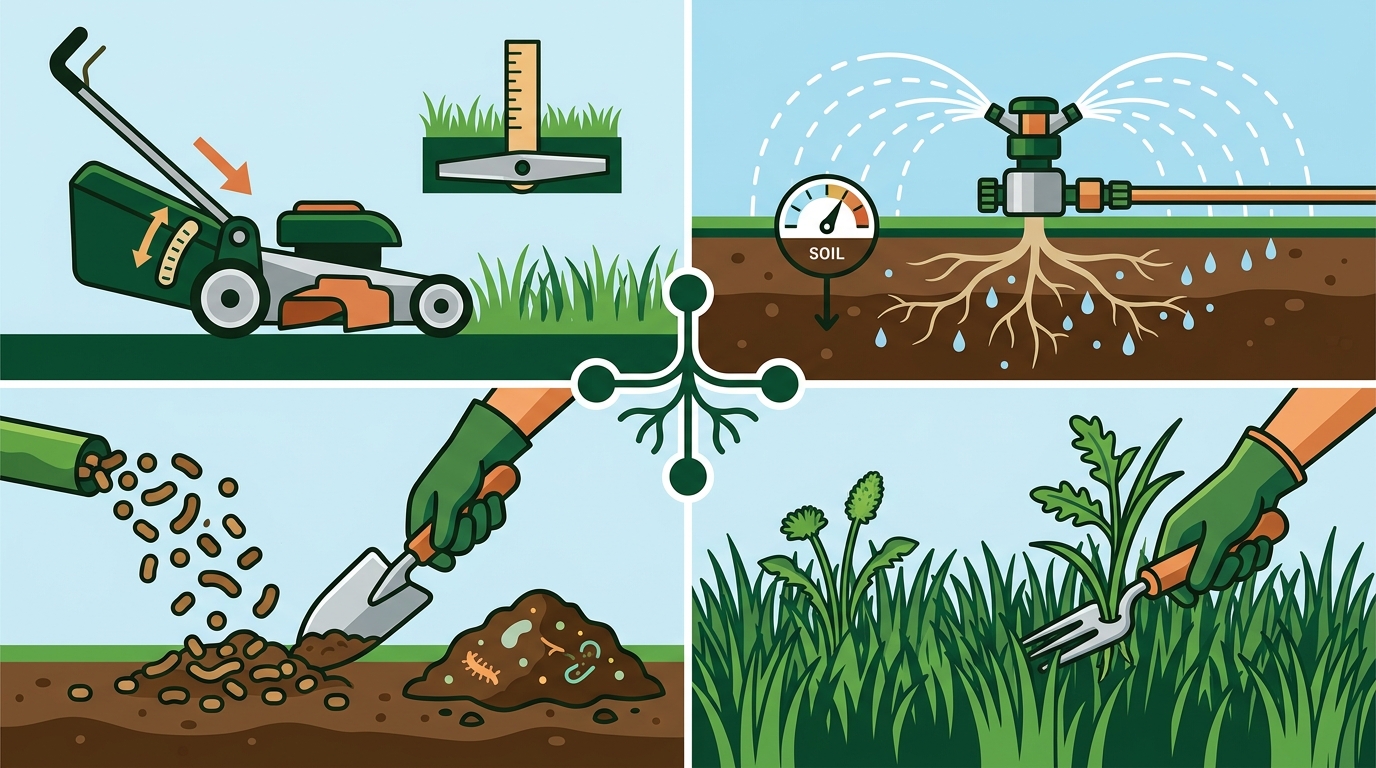
Yes, non-herbicide options can effectively maintain a healthy lawn when paired with rigorous cultural practices. Kick-Ass Grass utilizes a philosophy that prioritizes turf density and root health over chemical dependency. This guide covers proper mowing heights, deep watering schedules, natural fertilization strategies, and manual weed removal techniques. We explain how these four pillars work together to create a resilient landscape that resists invasion without relying on synthetic herbicides. For additional details, review the .
Proper Mowing Height
Mowing height is the single most effective tool for suppressing weeds without chemicals. Turfgrass density is the primary defense against weed establishment. When grass blades are cut too short, the canopy thins out. This allows sunlight to reach the soil surface. Sunlight triggers the germination of weed seeds. By keeping the grass taller, you create a dense shade layer that blocks weed seeds from sprouting. For additional details, review the Customer Experience.
Species-Specific Height Ranges
Different grass species have different optimal heights. Cool-season grasses like Kentucky bluegrass and perennial ryegrass thrive at 3 to 4 inches. Warm-season grasses like Bermuda and Zoysia often perform best at 2 to 3 inches. Mowing at the higher end of the recommended range for your specific turfgrass species is the best way to prevent broadleaf weeds from establishing, according to Rutgers University research. This practice forces the grass to grow deeper roots. Deeper roots access moisture and nutrients more efficiently. This creates a competitive advantage over shallow-rooted weeds. For additional details, review the Frequently Asked Questions.
The Thatch Factor
Proper mowing also manages thatch buildup. Thatch is the layer of dead stems and roots between the green blades and the soil. A thin layer of thatch is beneficial. It insulates the soil and retains moisture. However, excessive thatch creates a habitat for pests and disease. Mowing at the correct height prevents the accumulation of thick thatch layers. It ensures that the grass remains vigorous and healthy. This reduces the need for aggressive aeration or chemical treatments later in the season. For additional details, review the About.
Deep Watering Practices
Watering habits dictate root depth and overall turf resilience. Deep watering is the practice of applying a significant amount of water in a single session. This encourages roots to grow downward in search of moisture. Shallow, frequent watering keeps roots near the surface. Shallow roots are vulnerable to heat stress and drought. They also make the lawn more susceptible to weed invasion. Weeds often have shallow root systems that thrive in surface moisture.
Frequency and Duration
The goal is to water deeply but infrequently. For most lawns, this means watering two to three times per week. Each session should last long enough to provide 1 to 1.5 inches of water. You can measure this by placing tuna cans around the lawn. Time how long it takes to fill them. This method accounts for sprinkler efficiency and soil absorption. During hot weather, you may need to increase the frequency. However, you should still aim for deep penetration. This ensures the soil profile remains moist at depth.
Timing Matters
The time of day you water is critical. Early morning, between 4:00 AM and 10:00 AM, is the ideal window. Watering in the morning allows the foliage to dry quickly. This reduces the risk of fungal diseases. Watering in the evening leaves the leaves wet for too long. This creates a humid environment that favors disease. Watering during the midday heat leads to significant evaporation losses. You waste water and money. By watering in the morning, you maximize efficiency and promote a healthy, disease-free lawn.
Natural Fertilization
Organic Nutrient Sources
Soil Testing
Before applying any fertilizer, you should test your soil. Soil testing is the process of analyzing soil composition to determine nutrient levels. It reveals pH levels and deficiencies. You cannot fertilize effectively if you do not know what your soil needs. A soil test tells you exactly which nutrients are lacking. It prevents over-fertilization, which can harm the environment. It ensures you are applying the right product in the right amount. This precision is key to maintaining a healthy lawn without unnecessary inputs.
Manual Weed Removal
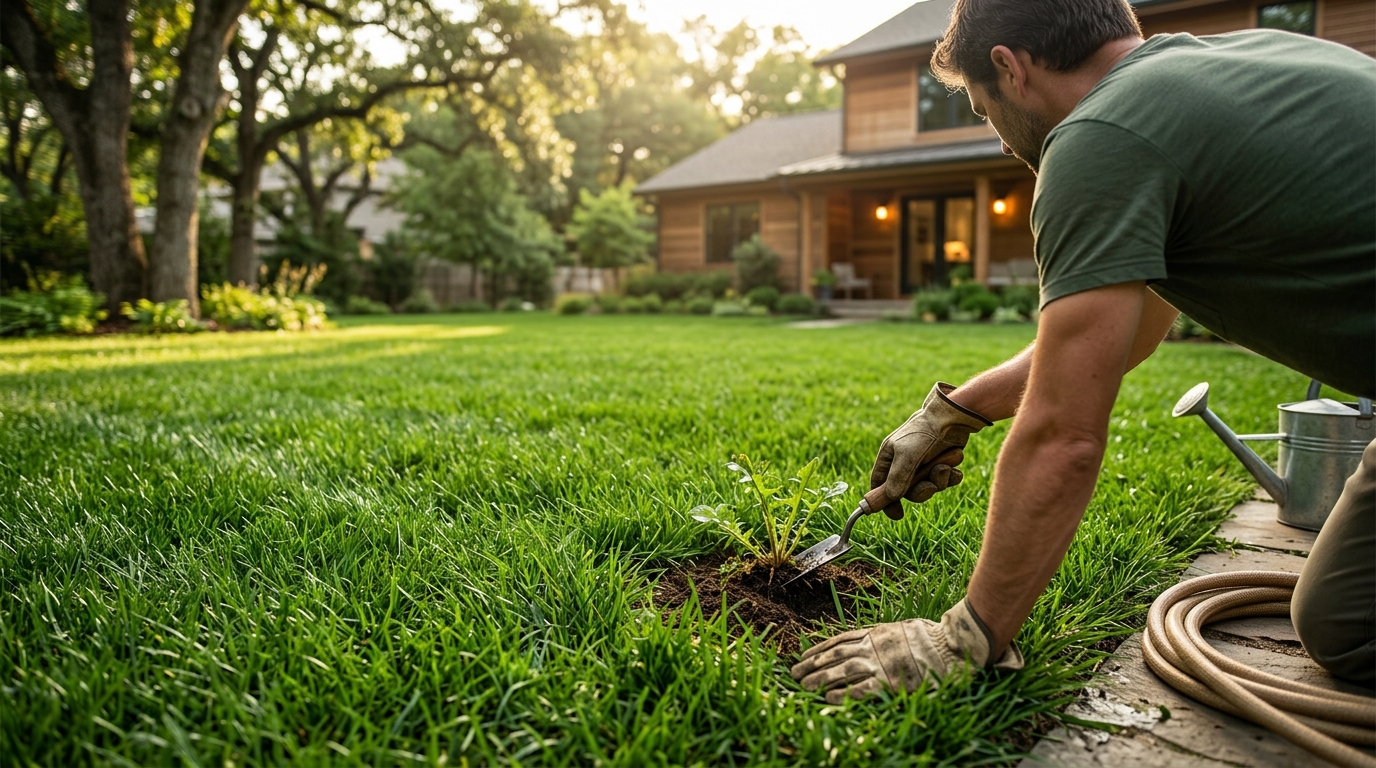
Manual removal is the most direct method of weed control. Manual weed removal is the physical extraction of weeds from the lawn. It involves pulling, digging, or hoeing out unwanted plants. This method is highly effective for small, isolated patches of weeds. It is less practical for large infestations. However, it is a critical component of an integrated pest management strategy. It allows you to target specific weeds without affecting the surrounding grass. It is a precise tool in your lawn care arsenal.
Timing and Technique
Timing is everything in manual weed removal. You should remove weeds before they go to seed. Once a weed sets seed, it becomes much harder to control. Spring and early fall are the best times for manual removal. The soil is moist, making it easier to pull weeds out by the root. You must remove the entire root system. If you leave the root behind, the weed will regrow. Use a hand fork or a dandelion weeder for precision. This tool allows you to dig deep and extract the taproot. It minimizes damage to the surrounding turf.
Prevention Through Density
Manual removal works best when combined with a dense lawn. A thick canopy of grass leaves little room for weeds to establish. This is why mowing height and fertilization are so important. They create the conditions for a dense turf. When the turf is dense, weeds struggle to compete for light and space. This reduces the number of weeds you need to remove manually. It makes the task less labor-intensive. It creates a positive feedback loop where a healthy lawn naturally resists weed invasion.
Cultural Practice Comparison
The following table summarizes the key cultural practices for maintaining a healthy lawn without relying on synthetic herbicides. Each practice plays a distinct role in weed prevention and turf health.
| Practice | Primary Benefit | Frequency | Key Consideration |
|---|---|---|---|
| Mowing Height | Shade and density | Weekly | Keep at 3-4 inches for cool-season grass |
| Deep Watering | Root depth and resilience | 2-3 times per week | Water in the early morning |
| Natural Fertilization | Steady nutrient supply | Seasonal | Test soil before applying |
| Manual Removal | Targeted weed control | As needed | Remove before seeding |
Key Takeaways
- Mowing at the higher end of the recommended range prevents broadleaf weeds by creating shade.
- Deep watering encourages deep root growth, making the lawn more drought-resistant. according to Improving a Struggling
- Natural fertilizers provide steady nutrients and improve soil biology over time.
- Manual weed removal is effective for small patches and should be done before weeds seed.
- Soil testing is essential to determine specific nutrient needs before fertilizing.
- A dense, healthy lawn is the best defense against weed invasion.
- Watering in the early morning reduces disease risk and evaporation losses.
- Consistency in cultural practices is more important than any single intervention.
Frequently Asked Questions
Can I completely eliminate weeds without using any chemicals?
It is difficult to eliminate all weeds without any intervention. However, you can significantly reduce weed populations through cultural practices. A dense, healthy lawn naturally suppresses most weeds. Manual removal handles the rest. This approach requires patience and consistency. It is a long-term strategy rather than a quick fix.
What is the best mowing height for preventing weeds?
The best height depends on your grass species. For cool-season grasses, 3 to 4 inches is ideal. For warm-season grasses, 2 to 3 inches is often best. Mowing at the higher end of the range creates more shade. This shade inhibits weed seed germination. It is a simple but highly effective strategy.
How often should I water my lawn to promote deep roots?
Water deeply but infrequently. Aim for 1 to 1.5 inches of water per session. This usually means watering two to three times per week. The exact frequency depends on your climate and soil type. The goal is to encourage roots to grow deep. This makes the lawn more resilient to heat and drought.
Are natural fertilizers as effective as synthetic fertilizers?
Natural fertilizers release nutrients more slowly. They provide steady growth rather than a rapid burst. This steady growth is often healthier for the lawn. It reduces the risk of disease and pest issues. Synthetic fertilizers can be effective but may lead to rapid, succulent growth. Natural options are better for long-term soil health.
When is the best time to manually remove weeds?
The best time is before the weeds go to seed. Spring and early fall are ideal. The soil is moist, making it easier to pull weeds out by the root. You must remove the entire root system. If you leave the root behind, the weed will regrow. Use a hand fork or dandelion weeder for precision.
Do I need to aerate my lawn if I am using non-herbicide methods?
Aeration can be beneficial, especially if you have compacted soil. It improves air, water, and nutrient movement to the roots. It is not strictly necessary for weed control. However, it supports overall lawn health. A healthy lawn is better at resisting weeds. Aeration is a complementary practice, not a replacement for mowing and watering.
How long does it take to see results from cultural practices?
It takes time to build a dense, healthy lawn. You may see improvements in a few weeks. However, full weed suppression may take a season or two. Consistency is key. You must maintain the practices over time. This is a long-term investment in your landscape. It is not a quick fix, but the results are sustainable.
Conclusion
Maintaining a healthy lawn without relying on synthetic herbicides is entirely possible. It requires a commitment to cultural practices. Proper mowing, deep watering, natural fertilization, and manual weed removal work together. They create a dense, resilient turf that resists weed invasion. Kick-Ass Grass believes in transparency and honesty. We focus on identifying and resolving specific lawn problems. We do not push unnecessary services. We help you build a lawn that is healthy from the ground up. If you are ready to take control of your lawn care, to discuss a plan tailored to your property.